
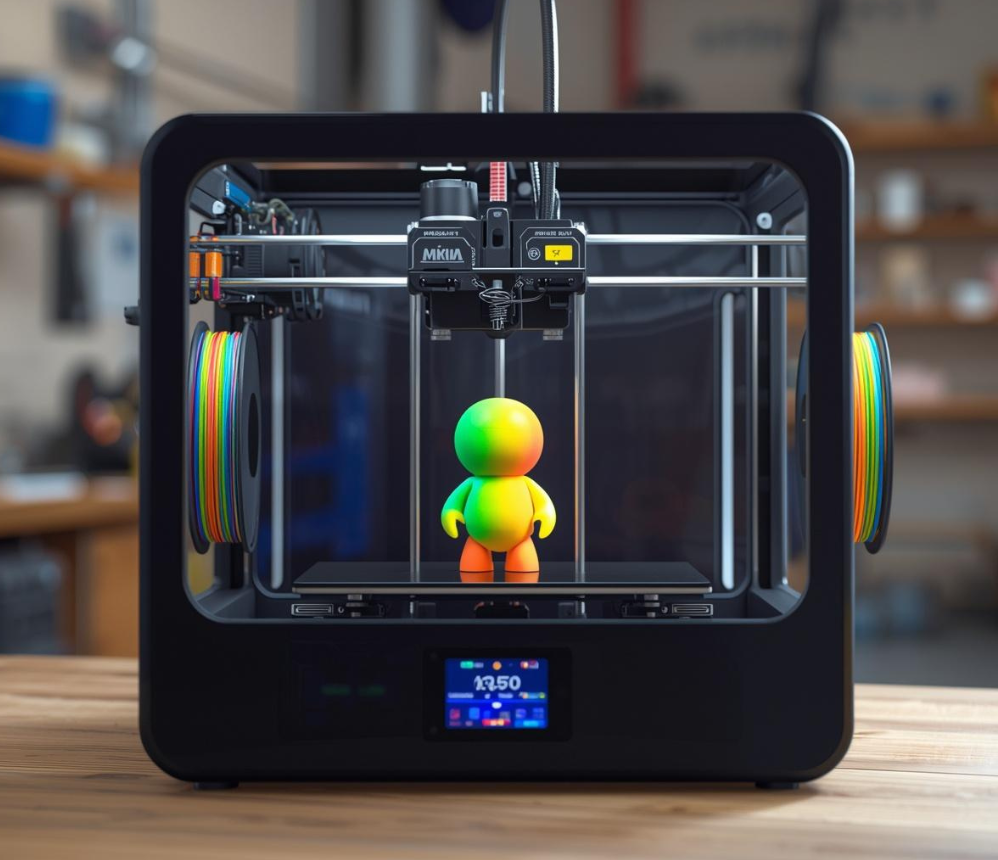
One of the most common questions we get at Flipp 3D is: "How long does it actually take to 3D print something?" The honest answer is — it depends. But let's break it down so you know what to expect.
Print time is determined by several key factors: the size of the object, the complexity of the design, the layer height (resolution), and the print speed settings. A small, simple fidget toy might take 1–2 hours, while a larger, more detailed item could take 8–12 hours or even longer.
Layer height plays a huge role. Printing at 0.1mm layer height gives you ultra-smooth, highly detailed results but takes significantly longer than printing at 0.3mm. Most consumer-grade toys are printed at 0.2mm — a good balance between quality and speed.
Infill percentage also matters. A toy printed at 15% infill (mostly hollow inside) will print faster than one at 50% infill (denser, stronger). For fidget toys that need to withstand daily use, we typically use 20–30% infill to ensure durability without excessive print time.
Support structures add time too. Designs with overhangs require support material that's printed alongside the object and removed afterward. Complex designs with lots of overhangs can add 20–30% to total print time.
Here's a rough breakdown: small fidget toys (like a spinner or cube) take 1–3 hours, medium palm-sized toys take 3–6 hours, and large or complex toys take 6–15 hours.
At Flipp 3D, we optimize every design to minimize print time without sacrificing quality. We also run multiple printers simultaneously, so your order doesn't have to wait for one print to finish before the next begins. The result? Fast turnaround and consistent quality every time.


